Publishing
Designing Social Media Visuals Responsibly
Create platform-ready visuals while preserving context, disclosure, and audience trust.

Start with the viewing context
Social images are often seen quickly, cropped by the platform, and separated from the caption that explains them. A responsible workflow considers what the image might imply on its own.
Identify the platform placement, expected crop, audience, and whether the visual represents a real event, person, place, product, or outcome. Synthetic imagery that could be mistaken for documentary evidence needs more care than an obviously illustrated pattern.
Design for legibility before decoration
Choose the aspect ratio for the placement and keep important subjects away from interface overlays. Use a single focal point, readable contrast, and enough visual quiet for any code-native headline added later.
Do not ask an image model to render essential campaign copy when exact spelling and brand consistency matter. Generate the visual foundation, then set verified text in a design tool or code so it remains editable and accessible.
Avoid misleading specificity
An AI image can make an unbuilt product, fictional place, or imagined customer look real. Context matters. If the image illustrates a concept, label it as a concept. If it visualizes a future feature, avoid implying that the feature is already available.
For people, avoid placing a recognizable individual in a fabricated sensitive situation. Do not create deceptive endorsements or imply that someone used a product without permission.
Review the whole frame
Fast social workflows encourage attention to the subject and neglect of the background. Zoom in before publishing. Check signs, reflected text, hands, faces in crowds, logos, license plates, landmarks, medical symbols, uniforms, and culturally sensitive details.
Look for visual stereotypes as well as technical errors. A scene can be polished and still rely on a narrow or harmful representation. Ask whether the prompt and selected result show people and places with appropriate context.
Keep a simple provenance note
For team work, record the prompt, model/provider, generation date, major edits, and the final reviewer. This does not need to be public in every case, but it makes corrections and rights checks easier.
A lightweight note might include:
- Generated with Grok Imagine through VisualMint AI.
- Prompt stored in the project brief.
- Color and copy adjusted by the design team.
- Reviewed for brand fit, disclosure, and background artifacts.
Match disclosure to risk
An abstract texture usually needs less explanation than a realistic image of a public event. A stylized illustration may already signal its synthetic nature. A photorealistic before-and-after comparison, political scene, health outcome, or news-like image deserves prominent context—or may be unsuitable entirely.
Policies and laws vary by platform and region. Check the current rules that apply to your account and audience rather than relying on a universal label.
Publish with an exit plan
Know who can remove or correct a post if an error is found. Keep source files and approvals accessible. Do not let the speed of generation eliminate the normal responsibilities of publishing.
Continue with Responsible AI Image Creation and Disclosure for a broader decision framework.
More from the journal
View all articles →
Prompting
Writing Better Prompts for Grok Imagine
A practical framework for describing subject, setting, light, composition, and mood without burying the idea.
Read article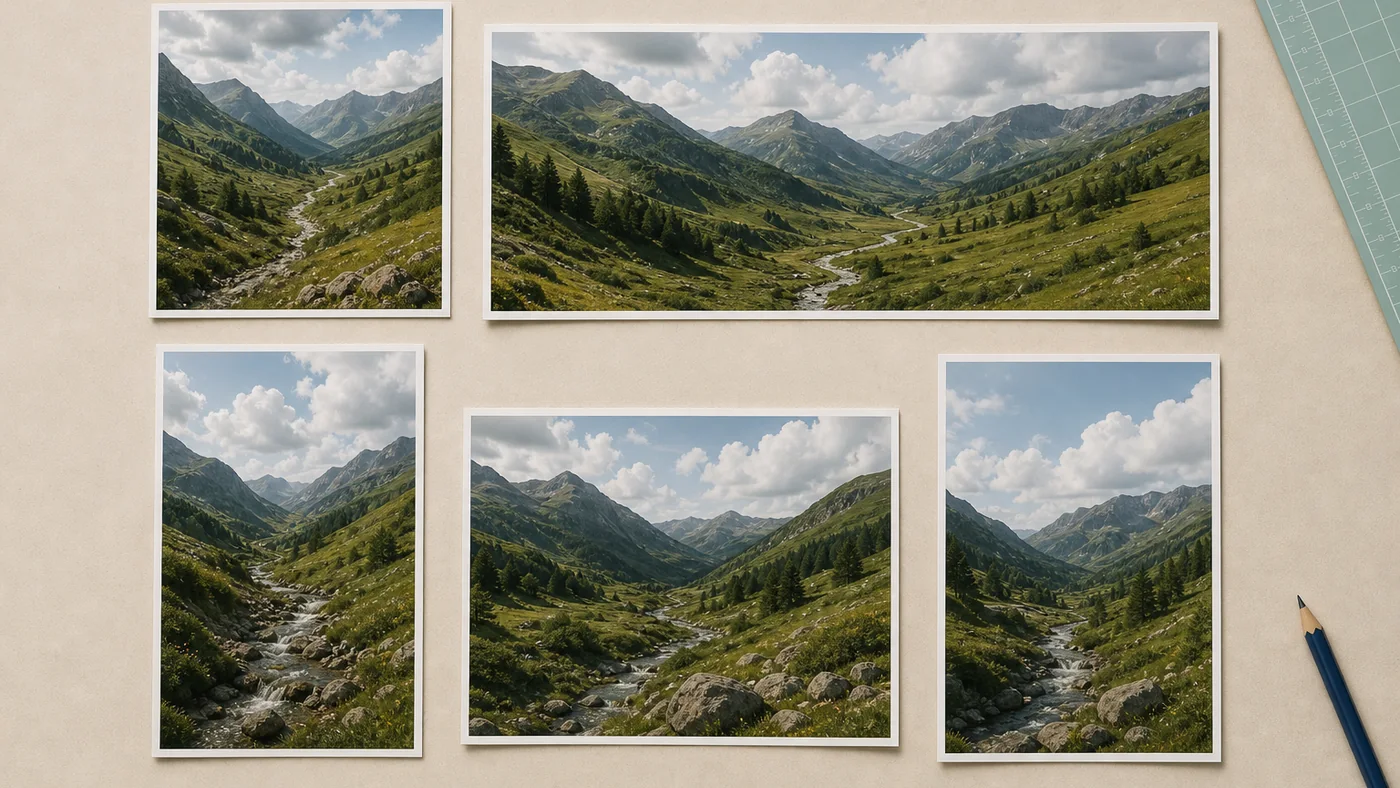
Composition
Choosing the Right AI Image Aspect Ratio
Match the canvas to the story, platform, and composition before you generate.
Read article
Technique
Lighting and Composition Terms for AI Prompts
A plain-English field guide to the visual terms that make prompts more precise.
Read article